Storm cleanup does not start with a plan. It starts with a limb down across the driveway at 6 a.m., rain still falling, and a decision about which saw comes off the truck first.
That decision is about job size, not brand loyalty. Put a battery pruning saw vs gas chainsaw side by side and you are really comparing reach against appetite. The small cordless tool handles what you can get to from the ground, one-handed, in a couple of passes. The gas saw handles the wood that is wider than the small saw's bar and heavier than your shoulder wants to argue about.
Most people own one saw and ask it to do both jobs. Then they either spend an hour fighting a limb that is too big for it, or they drag a heavy gas saw out for a branch they could have snapped by hand and finish with a numb arm and mix on their gloves.
This is how I sort that out on a storm call: how to read the wood, which saw to grab, and the caveats that decide whether the tool finishes the job or quits halfway through it.
Why you should trust me
I ran a tree service crew for 12 years outside Charlotte, North Carolina. I started at 19 as a ground guy hauling brush until my back gave out, and then I learned to run a saw properly because the alternative was getting hurt. Storm season is my busy season. Hurricane debris rolls in from the coast, ice storms fold maples over driveways, and I have cut trees off two roofs this year.
What that taught me is simple: a chainsaw has one job, which is to cut wood safely. Everything else on the box is marketing. I do not judge a saw from a spec sheet. I judge it by whether it starts cold after a night in the truck, whether it cuts wet wood, and whether the battery fits anything else I own. I time batteries with my phone instead of trusting the runtime claim, I check the warranty card before I check the price, and I have been burned twice by proprietary batteries and inflated runtime numbers.
How I judge a saw for storm work
Every saw I would hand my crew has to answer five questions first.
Does it start cold, first pull, after a night in the truck? A saw that needs coaxing at 6 a.m. in cold rain is dead weight, no matter what it costs.
How long does the battery really last at full throttle? Not the number on the box. The timed number, from a full charge, cutting wet wood.
Does the battery fit anything else I own? One tool on a dead-end battery platform is a paperweight with a handle.
Will it cut wet wood? Dry debris is easy. Wet wood chips are the test that separates the real tools from the toys.
Would I hand it to my crew at 6 a.m. after a storm? That is the only endorsement that counts.
Those five questions are why the answer to "which saw" is usually "both, and here is the split."
What the job actually asks for
Storm debris breaks into two categories, and they want different tools.
The first is reach-and-trim work: limbs hanging over a fence, brush piled against the garage, a branch cracked and dangling but still attached. These are cuts you make standing on the ground, often one-handed, with your other hand steadying the limb. You want light, quiet, and instant.
The second is buck-and-block work: a trunk on the ground, a limb thicker than your forearm, wood soaked through from three days of rain. These are cuts where you want the bar buried and the saw pulling hard, and where a tool that stalls mid-cut is a hazard, not an inconvenience.
Match the tool to the category and the morning goes fast. Mismatch it and you spend an hour swapping batteries or flooding a carburetor.
The two saws that cover the work
You do not need a wall of saws. You need one small cordless tool for the reach-and-trim half and one gas saw for the buck-and-block half. Here is the pairing I would point a homeowner at.
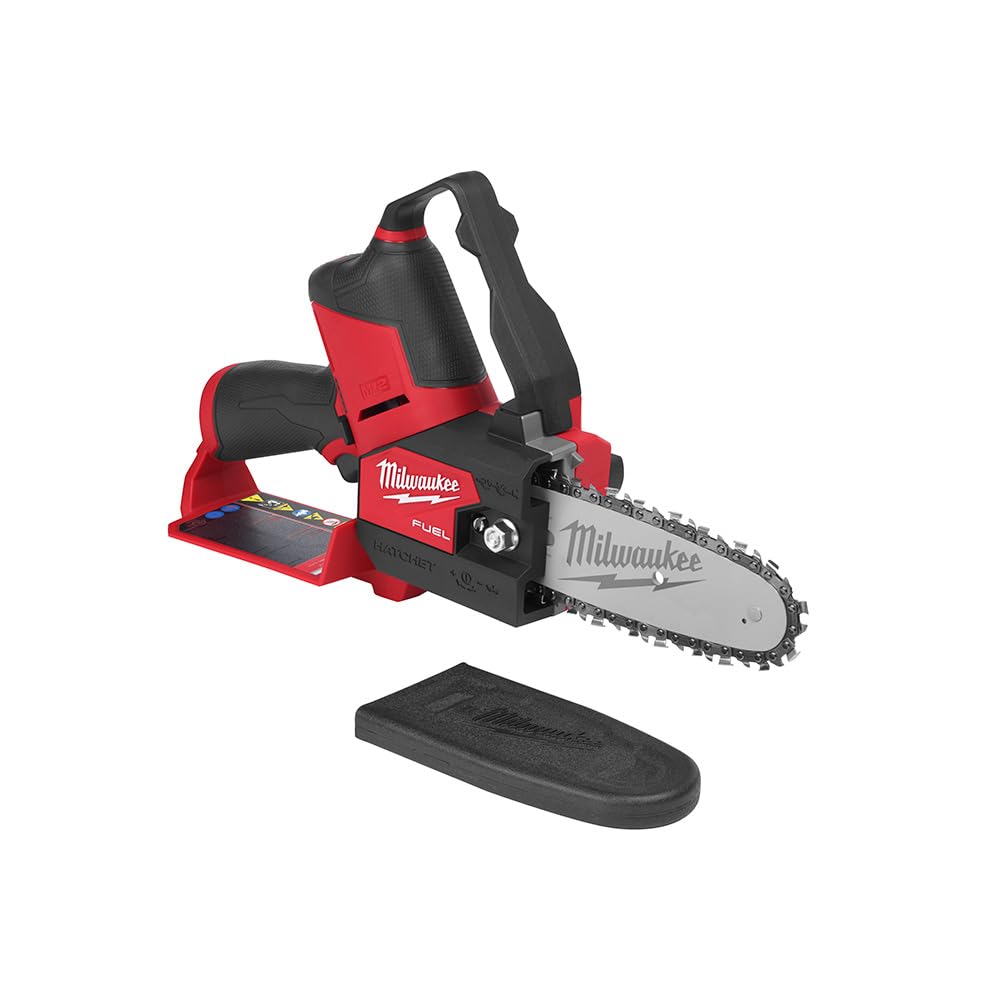
The trimming pick: Milwaukee Saw Pruning Cordless 12V 6IN 2527-20
 Visit on Amazon →
This is the saw for work you do standing up. A 12 volt cordless pruning saw with a 6 inch bar is a one-hand tool: no pull start, no fuel mix, no exhaust in your face while you reach over a fence, and no argument with the neighbor about noise. My own light-duty kit has been battery for three years and I have not missed the pull cord once on a trimming job.
What it is good at is limbs you can reach and cut in a pass or two, plus the brush cleanup that follows every storm. What it is not is a felling saw. The bar sets the ceiling on this tool, and the ceiling is low. If the wood is wider than the bar, or you cannot finish the cut without repositioning three times, put it down and get the gas saw. Do not stand on a ladder to make a battery saw reach something it was never built to reach.
The other thing to check before you buy is the platform. A 12 volt saw is only cheap if the battery and charger you already own fit it. If you are starting from zero, price the battery and the charger in with the tool, because a single proprietary battery that fits one tool is the trap I warn everybody about.
Flaws but not dealbreakers: It is a trim tool with a trim tool's limits, and it will not replace a gas saw on a real storm call. Buy it for what it is.
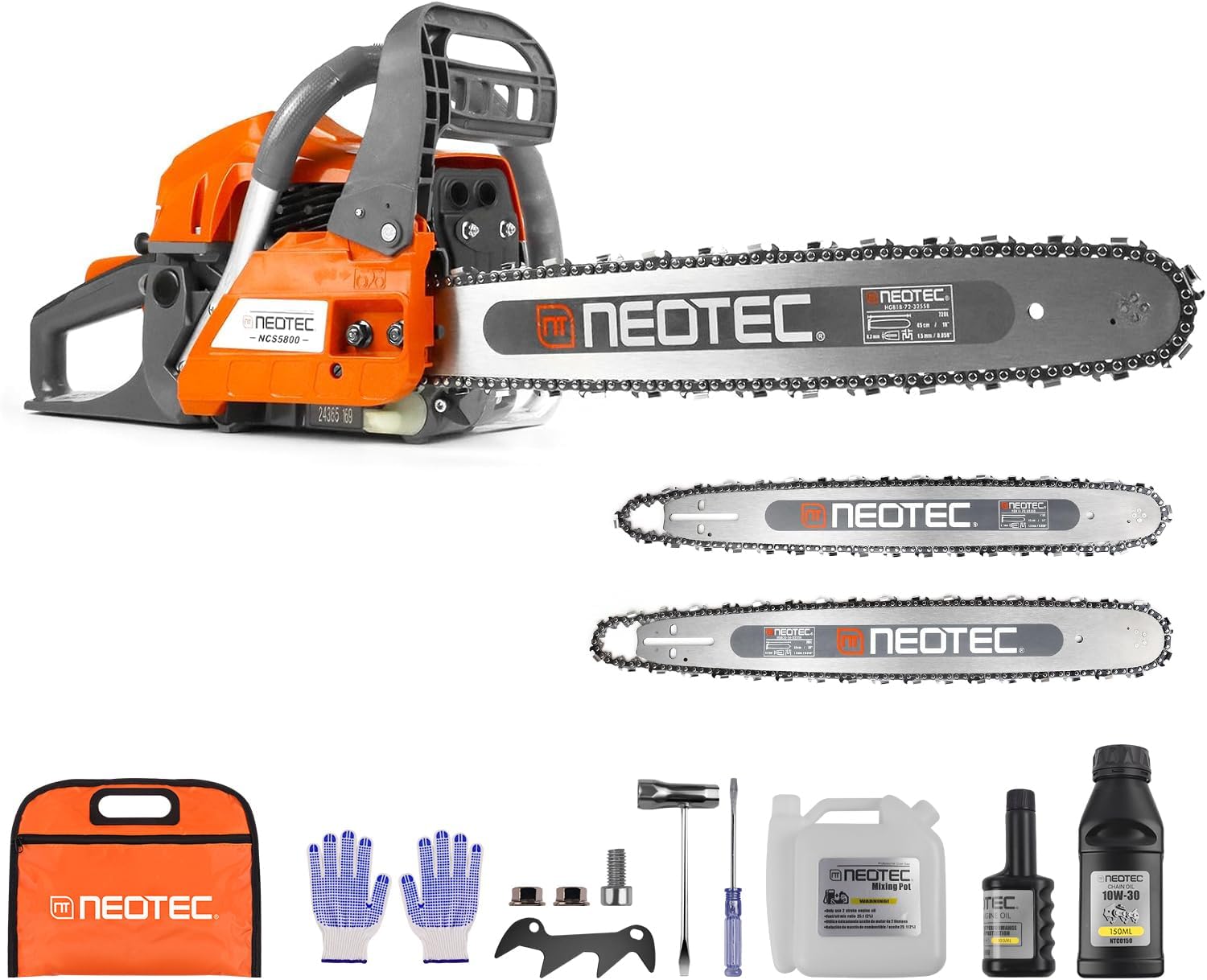
The storm-work pick: 58CC Gas Powered Chainsaw 18 20 Inch Bars Chain Ergonomic Chainsaw Chain Brake Anti-Vibration System, 2-Cycle Petrol Motosierra De Gasolina for Tree Cutting Firewood Wood Yard Cleaning
 Visit on Amazon →
This is the other half of the pairing. A 58cc two-cycle saw with an 18 to 20 inch bar is a bucking and blocking tool: enough displacement to keep the chain moving in wet wood, enough bar to take a trunk section in one pass instead of three, and no runtime clock to watch. Gas is the backup you never apologize for, and when the tree is on the roof and the clock is running, that is the saw I want running.
Two features on this listing matter more than the rest of the copy. The chain brake is not optional on a saw this size, because kickback on a long bar comes at your face, not your boots. The anti-vibration system is the difference between cutting for an hour and cutting for 20 minutes with your hands buzzing. If you have ever run a cheap saw that numbed your fingers, you know what that is worth.
The caveats are the same as any gas saw. You are mixing two-cycle fuel, you are pulling a starter cord in the cold, you are carrying more weight, and you are doing more maintenance. A saw in this class also demands a sharp chain and a light hand. Lean on it and you will bog it, and a bogged saw in a storm pile is how people get hurt.
Flaws but not dealbreakers: Gas means fuel, noise, and a starting procedure. That is the price of the power, and no battery saw at this size removes it entirely.
The driveway decision, step by step
This is the sequence I run before I start a saw on a downed limb.
Step one: look up. Before you look at the wood, look at what is above it. A limb hung up in another tree, a branch resting on a power line, anything leaning over a roof is not a homeowner job. Call a pro. Both trees I cut off roofs this year started as "I thought I could get it."
Step two: compare the limb to the bar. If the wood is narrower than the bar and you can reach the cut from the ground, the cordless saw is the right tool. If the wood is wider than the bar, or the cut is at knee height in a pile, bring the gas saw.
Step three: check what is under the cut. Fence posts, a concrete edge, a hose, a dog. The chain does not care what it hits after the wood, and neither does your wallet.
Step four: pick the saw that can finish without a swap. If the cut needs a fresh battery or a refill halfway through, you picked wrong. A half-finished cut in tension wood is the most dangerous thing on the property.
Step five: take the tension wood in small bites. Work in sections and let the wood tell you where it wants to move. Small bites with a sharp chain beat one heroic pass with a dull one every single time.
The details that end a job early
A few things decide more storm calls than the saw model does.
A dull chain. The chain is the saw. A sharp chain on a cheap saw beats a dull chain on an expensive one, and a lot of chains ship dull from the factory. File it before the storm, not during it.
Two-cycle mix. The wrong ratio, old fuel, or fuel left in the tank from last season will cost you a carburetor. Mix fresh, and run the tank dry before you store the gas saw.
The battery platform. Check what else the battery fits before you buy the tool. If it fits one tool only, you are renting that tool forever.
Paperwork. Open the box and find the warranty card. If the card is missing and there is no email address on the site, that is part of the decision.
Protection. Chaps, eye protection, and hearing protection on every cut, both saws, every time. Kickback does not check whether you were only making one quick cut.
What this setup actually costs you
The honest answer is that the second saw is the cheap part.
If you already run the 12 volt platform the pruning saw uses, the trimming half of this pairing is a tool purchase and nothing else. If you do not, you are buying into a battery system, and that is the number to look at first. One platform, or it is a paperweight.
The gas half carries its own ongoing cost: mix oil, a couple of spare chains, a file kit, and the fuel you burn. None of it is dramatic, but it never stops, which is why the gas saw is the one I keep for storm calls and the battery saw is the one I grab for everything else.
Compare the total against what you would pay a crew for one storm cleanup and the math gets easy fast. One service call is usually the whole setup.
The short version
Reach-and-trim work goes to the cordless pruning saw: light, quiet, one hand, no fuel. Buck-and-block work goes to the 58cc gas saw: more bar, more power, no runtime clock. Keep both, know which is which, and never make a big saw do a small job or a small saw do a big one.
That is the whole method. The tree does not care what the box said. It only cares whether the chain is sharp and whether the saw starts.